
Pruning Before Renewal
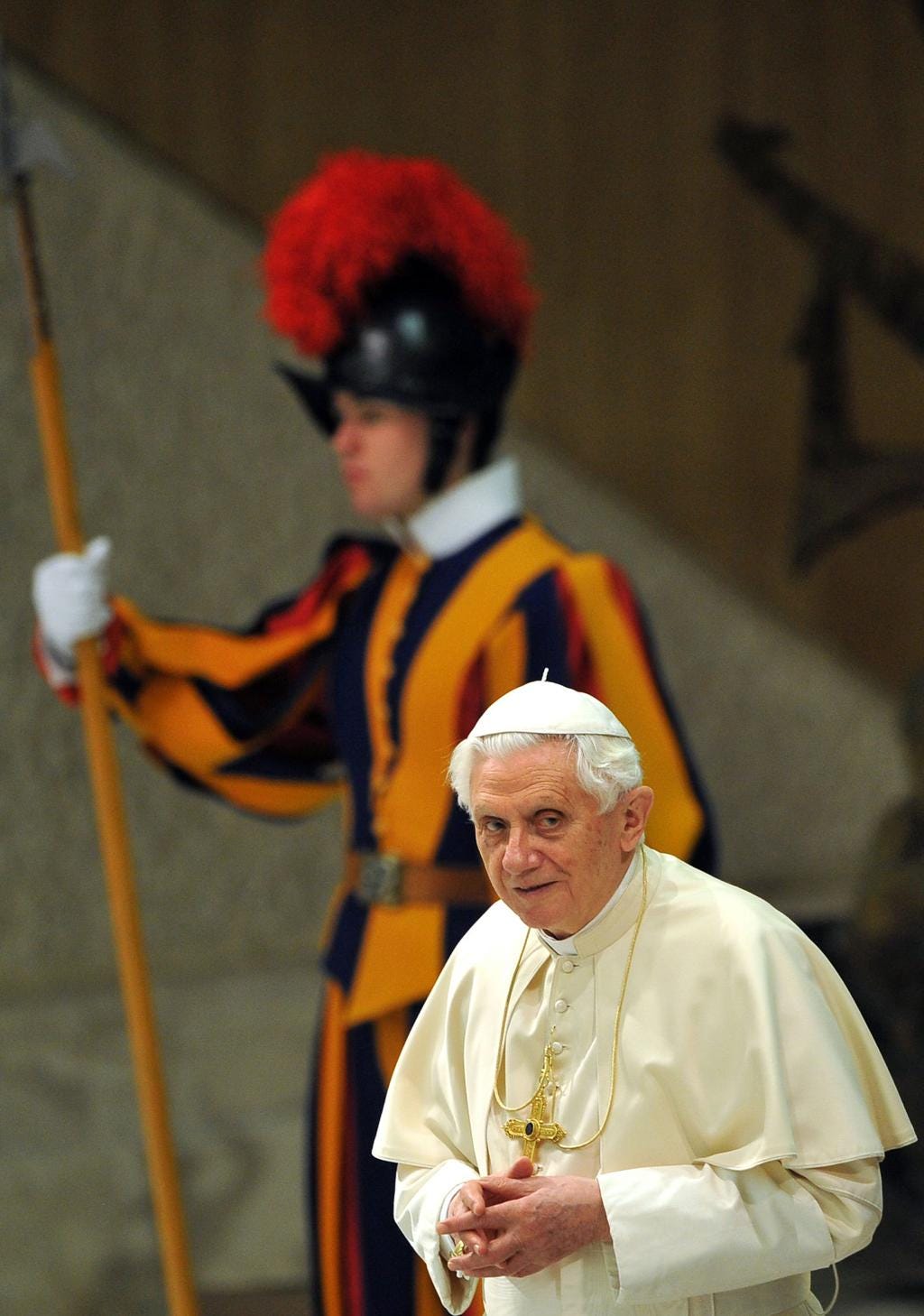
Benedict XVI, Lord of the World, and the Logic of the Fourth Turning

Periods of civilizational renewal rarely begin with expansion.
They begin with loss.
Institutions shrink. Influence fades. Confidence weakens. What once seemed permanent begins to look fragile. In such moments, the natural instinct is to call the situation decline, failure, or collapse.
But older traditions often use a different word:
pruning.
The idea appears in Scripture, in monastic life, in political history, and even in modern generational theory. Growth that cannot be sustained is cut back so that life itself can continue.
If the present moment resembles earlier crisis eras, then the question may not be how to restore what we had, but how to endure the pruning that comes before renewal.
I. Benedict XVI and the Smaller Church
Long before he became pope, Pope Benedict XVI spoke about the future of Christianity in the modern West in terms that sounded pessimistic at the time but now seem almost descriptive.
In a 1969 radio address, Joseph Ratzinger predicted that the Church would lose cultural dominance, lose social prestige, and become smaller and poorer. It would no longer be supported automatically by the surrounding society. It would have to live with less influence, fewer institutions, and fewer nominal believers.
But he did not describe this as destruction.
He described it as purification.
The Church, he suggested, might have to begin again from smaller, more faithful communities. Only after this narrowing could something stronger grow.
The image often used to summarize his thought is the image of a vineyard:
Branches are cut back not because the vine is dying, but because it must live.
II. Robert Hugh Benson and the Remnant
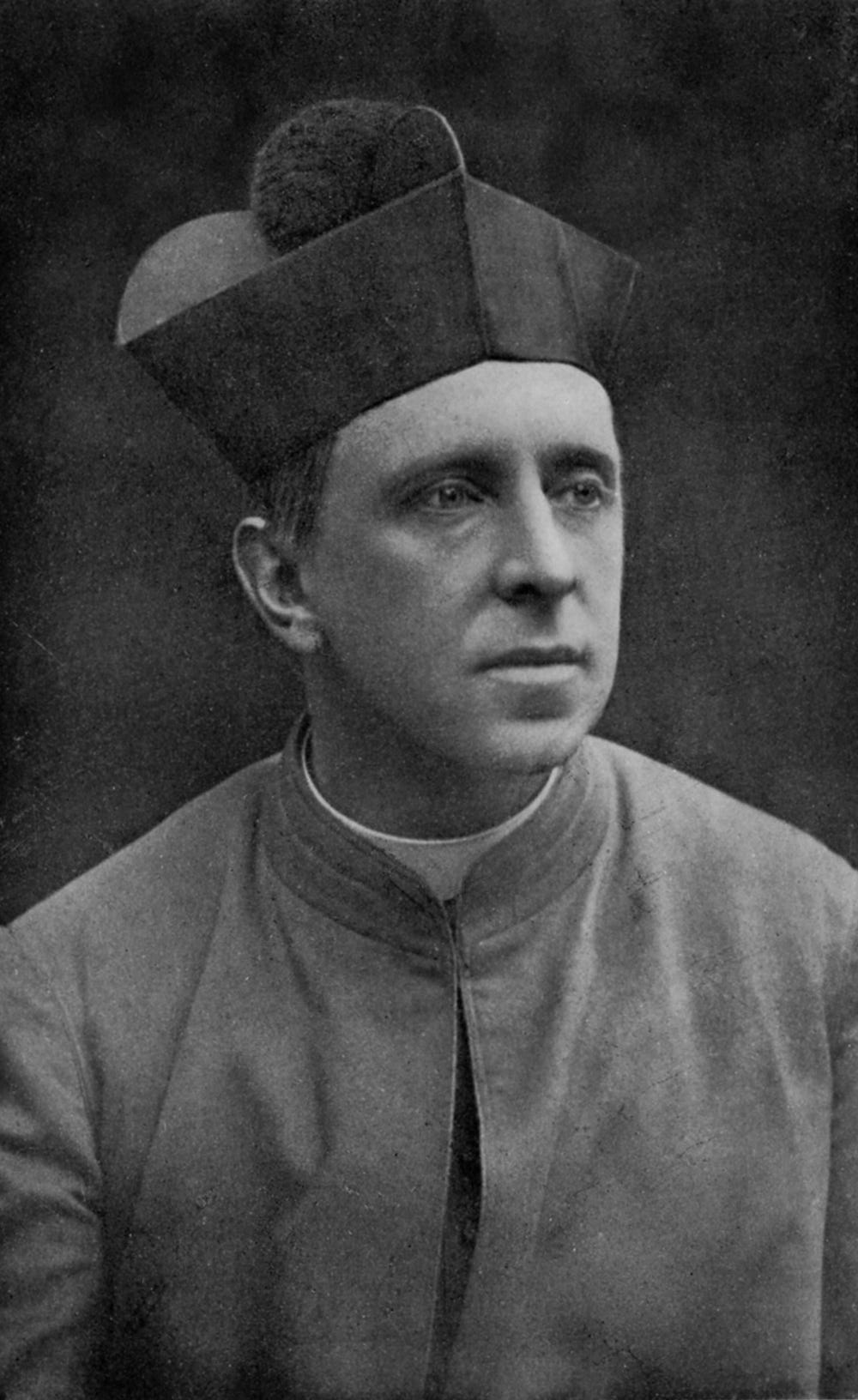
Decades earlier, the English priest Robert Hugh Benson imagined a similar future in his 1907 novel Lord of the World.
Benson wrote at the end of the Victorian age, when European civilization still appeared confident and secure. Yet his story described a world of technological progress, global unity, and humanitarian ideals in which Christianity survives only as a small and increasingly isolated remnant.
The danger in the novel is not barbarism.
It is a world that believes it no longer needs transcendence.
The Church in Lord of the World is not destroyed in one dramatic moment.
It becomes marginal, then misunderstood, then opposed, and finally reduced to something that looks insignificant by worldly standards.
And yet it survives.
Not through power.
Through fidelity.
Benson belonged to the generation just before the catastrophes of the twentieth century, but his imagination anticipated what the Lost Generation would experience: the collapse of old certainties, the fall of empires, and the need to rebuild without the illusions of the previous age.
III. The Fourth Turning as Pruning
The generational theory of William Strauss and Neil Howe describes history as moving through cycles of growth, confidence, complacency, and crisis.
In their model, the crisis era — the Fourth Turning — comes when institutions built in an earlier cycle no longer fit the present. Debt accumulates, trust erodes, elites divide, and the system becomes too rigid to adapt gradually.
Eventually something gives.
Wars, depressions, revolutions, or cultural upheavals force a reset.
Seen from inside the crisis, this looks like collapse.
Seen from a longer perspective, it often looks like pruning.
After the Civil War, the United States emerged more centralized but more stable.
After the Depression and World War II, the country emerged poorer but more cohesive.
After each crisis, the structure was smaller in some ways and stronger in others.
The Fourth Turning is not only destruction.
It is the cutting away of what can no longer be sustained.
IV. The Benedictine Pattern
When the Western Roman world weakened, the response that endured was not an attempt to preserve every institution exactly as it had been.
It was the slow work associated with St. Benedict of Nursia and the monastic tradition.
Monasteries did not save the empire.
They preserved learning, liturgy, agriculture, and community through a period when the larger political order was unstable. They were smaller than the civilization that produced them, but more durable than the structures that collapsed around them.
This pattern appears again and again in history.
When large systems weaken, survival often moves to smaller, more intentional communities.
Not because people want less, but because less can be sustained.
Pruning is not the end of life.
It is the condition for its continuation.
V. Why Pruning Feels Like Failure
Late-cycle cultures expect constant expansion.
Economic growth should continue.
Institutions should grow larger.
Influence should increase.
Comfort should accumulate.
When the trend reverses, the instinct is to assume something has gone wrong.
But long civilizations rarely grow in a straight line.
They expand, stabilize, overextend, and contract.
After contraction, they sometimes grow again — but differently.
A generation living through the contraction often feels cheated.
It inherits obligations without the rewards that earlier generations enjoyed.
Yet those generations frequently make renewal possible precisely because they accept limits that others refused.
They cut back debt.
They rebuild families.
They preserve institutions at smaller scale.
They choose durability over speed.
They do the work of pruning.
VI. The Remnant and the Future
Both Benedict XVI and Robert Hugh Benson understood that renewal rarely begins with dominance.
It begins with survival.
A smaller Church.
A smaller community.
A smaller circle of trust.
A smaller set of institutions that still function.
From the perspective of the age, this looks like defeat.
From the perspective of history, it often looks like preparation.
The Fourth Turning, if the theory is right, is not only a time when systems break.
It is a time when illusions are stripped away.
And what remains, if anything remains, becomes the seed of the next order.
VII. After the Pruning
No one living in a crisis era can know whether renewal will follow.
Pruning always feels final while it is happening.
But the pattern repeats often enough to suggest a possibility worth remembering.
Civilizations sometimes survive not because they avoid loss,
but because someone accepts it.
Branches are cut back.
Communities grow smaller.
Expectations narrow.
Structures simplify.
Not so that life can end.
So that life can continue.